Precision manufacturing + engineering
Manufacturing and engineering website redesign.
The business solves difficult, high-value problems, but the website reduces years of expertise to equipment lists, PDFs and dated language.
Request a private review
The short answer
Precision manufacturers usually have a stronger business than website. The redesign that generates enquiries replaces machine lists and downloadable capability statements with pages built around what a technical buyer actually verifies: tolerances, materials, accreditations, sector experience, lead times and whether you have solved their exact problem before.
Recognise this?
What usually goes wrong.
If several of these are true, the problem is structural rather than cosmetic.
- The capability page lists machines by model number, which means nothing to a buyer who thinks in tolerances and materials.
- Accreditations — AS9100, ISO 13485, ITAR, NADCAP — appear as small logos rather than as the qualifying facts they are.
- There is no evidence of sector experience, so an aerospace buyer cannot tell whether you have ever worked in aerospace.
- The site was built before mobile mattered and now loses half its visitors on a phone in a workshop.
- Recruitment suffers, because skilled engineers judge an employer by the same website buyers do.
What the redesign changes
Capability should feel powerful.
We turn technical depth into clear pages about sectors, capabilities and proof, so buyers, partners and future hires can understand it quickly.
Translate machines into capability
A buyer needs to know what you can hold, in what material, at what size and volume, to what standard. Publishing that clearly is the single highest-value change most engineering websites can make.
Put accreditations where they qualify you
For regulated sectors, accreditation is not a badge — it is the gate. It belongs in the page copy, in the sector pages and in the structured data, not only in a footer strip.
Build sector pages, not a sector list
Aerospace, medical, motorsport and energy buyers each have distinct requirements and vocabulary. One page per sector, written in that sector's language, does more than any amount of homepage copy.
Make the technical enquiry effortless
Buyers arrive with a drawing and a deadline. Let them send it. An RFQ route that accepts a file and asks the right three questions converts far better than a generic contact form.
No cost, no obligation
Is this your website?
45 minutes with O'Neill on what is holding the current site back, and the findings in writing afterwards — whether or not you go further.
Modern search
How buyers in this sector actually find you.
Technical buyers search in extremely specific terms — a process, a material, a tolerance, a standard, a sector — and increasingly ask AI assistants to shortlist suppliers who meet them. Capability and sector pages that state those facts plainly are the only way to appear in that shortlist.
See how search has changedRelated work
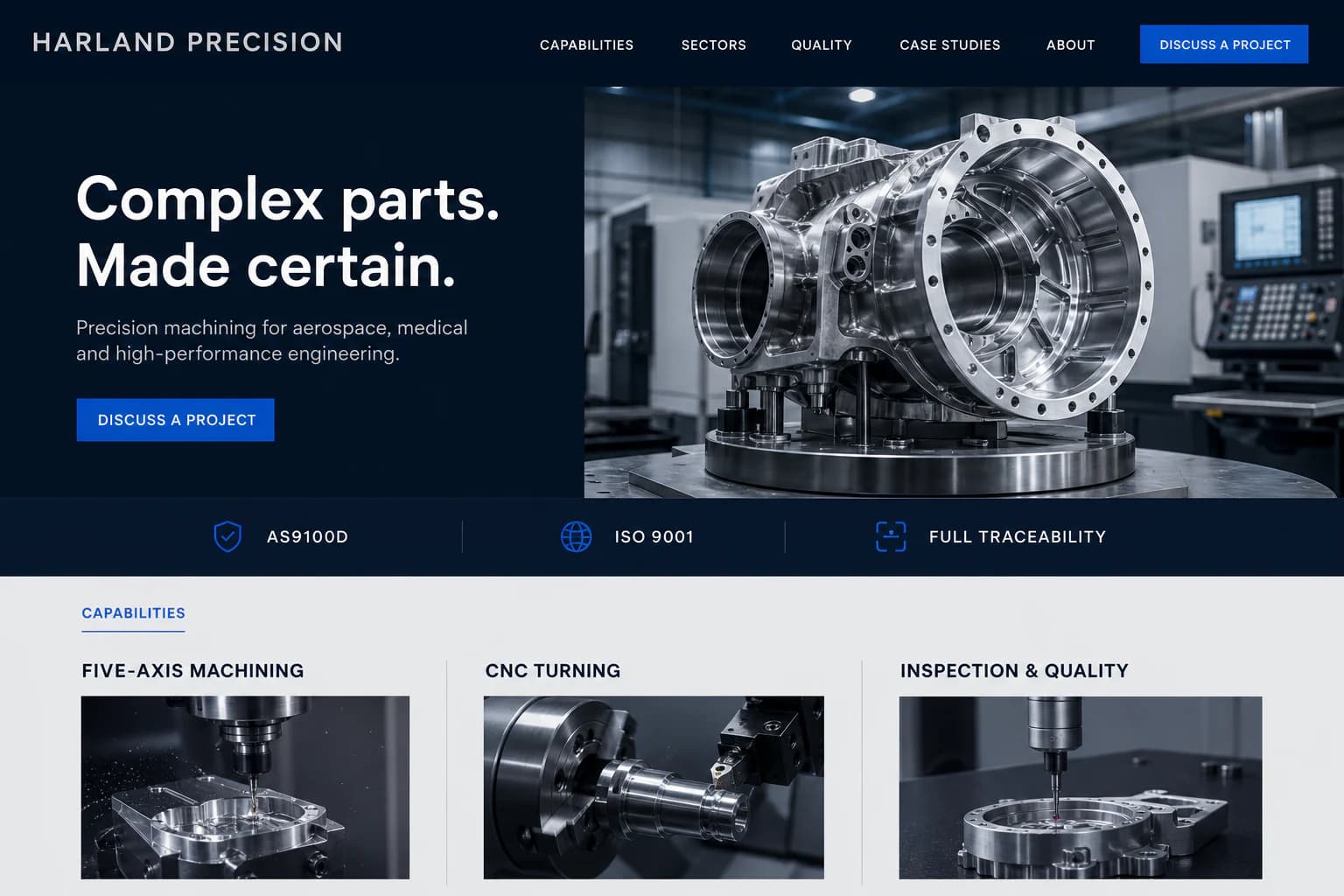
See it applied.
Questions from this sector.
How much technical detail should we publish publicly?
Enough to qualify: processes, materials, envelope, tolerances, standards and sectors. Customer names, drawings and commercial terms normally stay private. The public detail exists to make the right buyer confident enough to make contact.
Our sector is not consumer-facing. Does website design really matter?
It matters because your buyers are procurement engineers who shortlist suppliers online before contacting any of them, and because skilled engineers assess employers the same way. A dated site quietly removes you from consideration in both.
Other sectors
Does the business feel more valuable than the website?
Request a private review