Private healthcare + specialist wellness
Private healthcare website redesign.
Patients and referrers need clarity, reassurance and evidence. Many specialist websites feel either cold and anonymous or polished but vague.
Request a private review
The short answer
A private healthcare website earns enquiries through credibility rather than persuasion. The redesign should make clinicians, credentials, procedures, risks, costs and locations genuinely clear, answer the questions patients are too embarrassed or anxious to ask, and keep every claim defensible under regulatory scrutiny.
Recognise this?
What usually goes wrong.
If several of these are true, the problem is structural rather than cosmetic.
- Clinician pages list qualifications as acronyms with no explanation of what they mean or why they matter.
- Procedure pages describe benefits at length and recovery, risk or cost barely at all — which patients read as evasion.
- The site is not accessible, so patients with the conditions you treat struggle to use it.
- Marketing language drifts towards claims that would not survive an ASA or regulatory challenge.
- Booking means a phone number and an answerphone, while competitors offer an immediate route.
What the redesign changes
Trust before the appointment.
We create calm, accessible pages about services, clinicians, locations and real questions, with careful claims and clear routes to book or enquire.
Answer the anxious questions first
Does it hurt, what does it cost, how long until I am back at work, who exactly will treat me, what happens if something goes wrong. Answering these plainly is both the most useful content and the most trusted.
Make clinicians legible as people
Patients choose a person, not a clinic. Real photography, plain-English credentials, areas of focus and something of the individual's approach convert far better than a directory of headshots.
Treat accessibility as clinical care
Contrast, text scaling, keyboard navigation and clear language are not compliance overhead in healthcare. They are the difference between a patient being able to use your site and going elsewhere.
Keep claims defensible
Every outcome statement should be traceable to evidence you can produce. Careful claims read as more confident than superlatives, and they do not create regulatory risk.
No cost, no obligation
Is this your website?
45 minutes with O'Neill on what is holding the current site back, and the findings in writing afterwards — whether or not you go further.
Modern search
How buyers in this sector actually find you.
Health queries are held to a higher standard by both Google and AI assistants, which weigh author expertise, credentials and citation quality heavily. Named clinicians with real credentials, careful sourcing and genuinely useful answers are the only durable route to visibility here.
See how search has changedRelated work
See it applied.
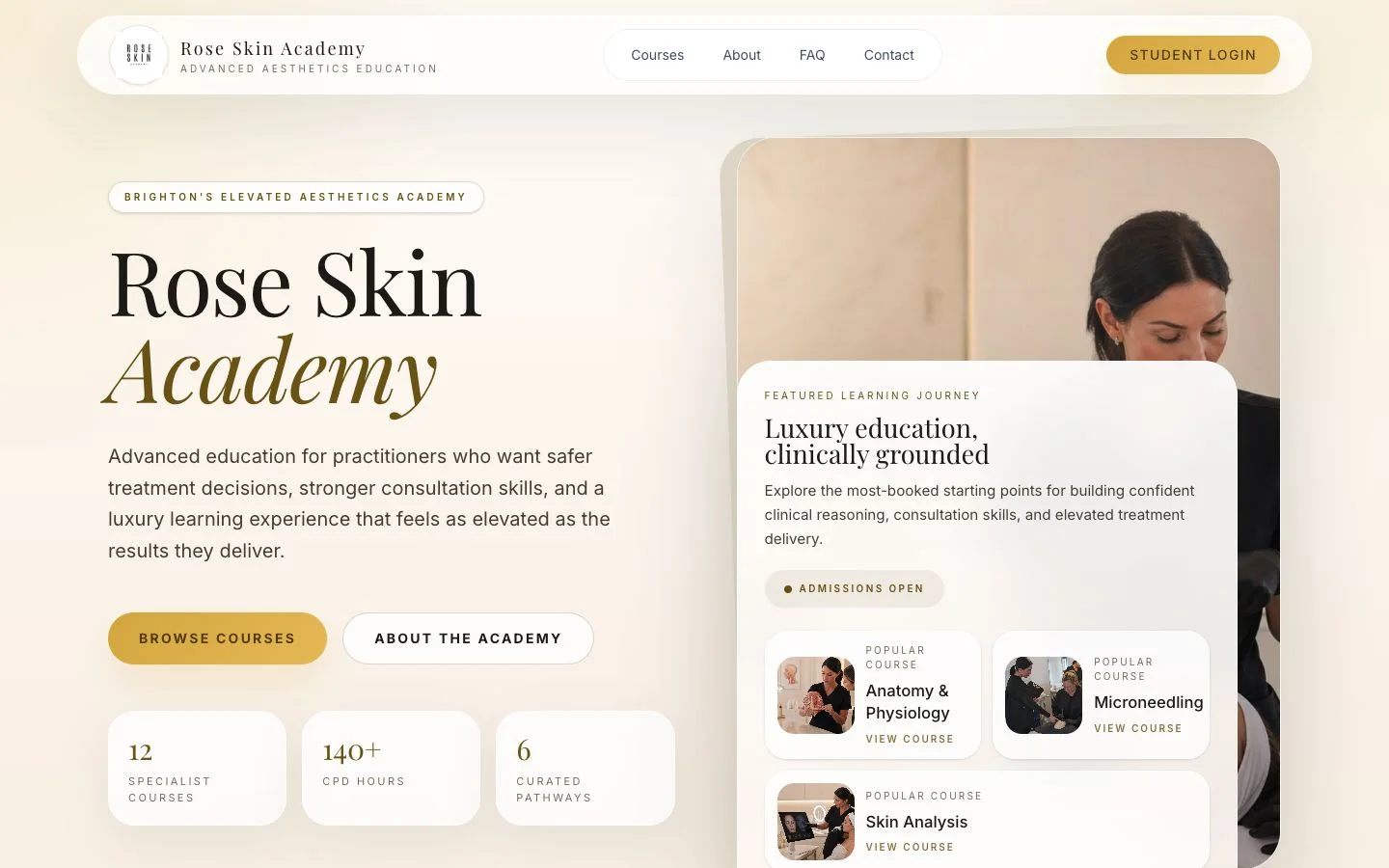
Live project / Healthcare education
Rose Skin Academy
A premium academy website that turns a complex course catalogue into clear learning paths and confident admissions.
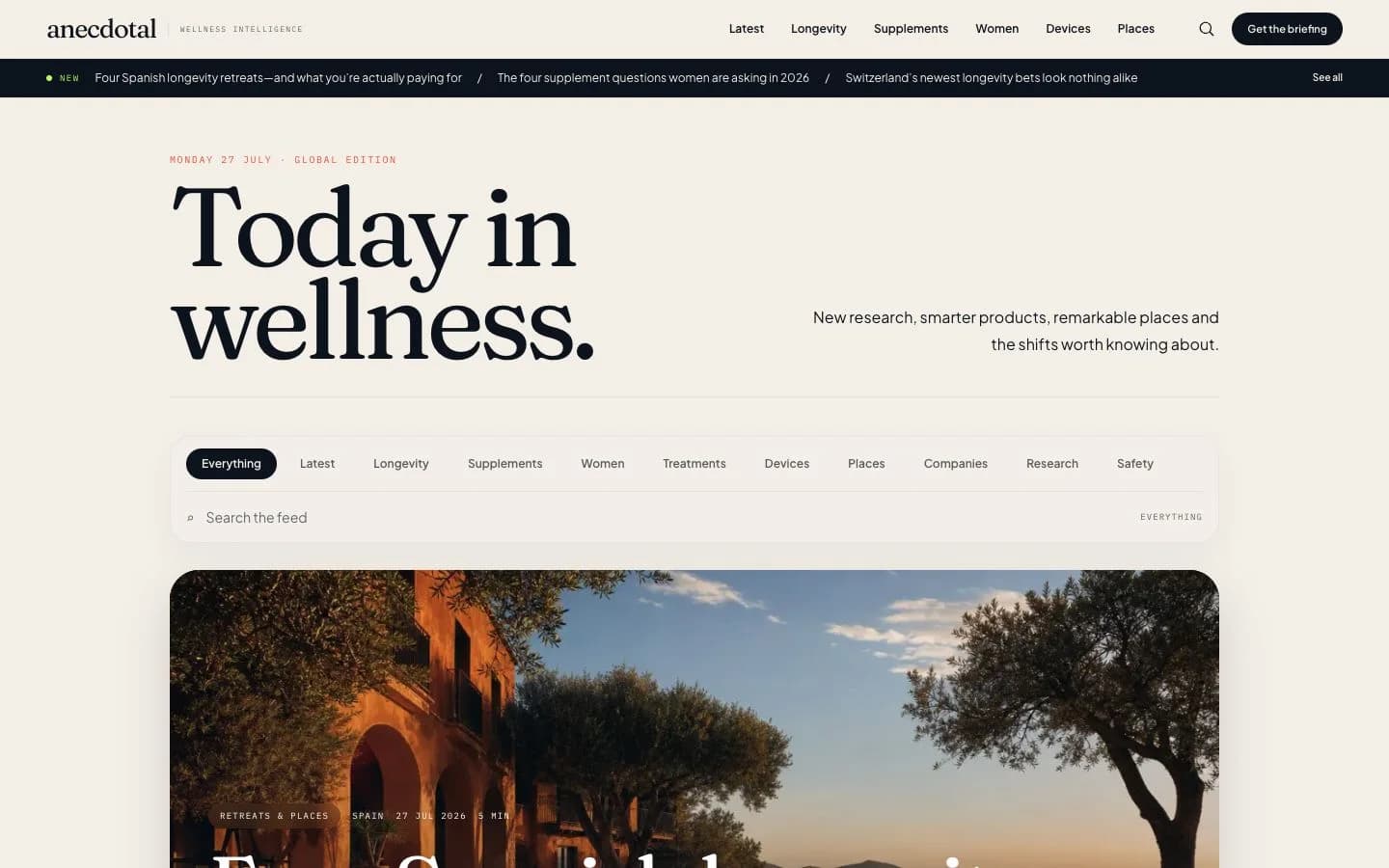
Live project / Health + consumer brand
Anecdotal Health
An evidence-led health platform that helps people move from broad supplement questions to a clearer first choice.
Questions from this sector.
Should we publish our prices?
In most private healthcare, yes — at least a from-price or a range. Patients treat hidden pricing as a warning sign, and price is one of the most common questions asked of AI assistants. It also removes a great deal of unqualified enquiry handling from your reception team.
How do you handle regulatory and advertising compliance?
We write to the standard from the start rather than editing back from it, keep every outcome claim tied to evidence you hold, and flag anything that needs review by your own regulatory or legal advisor before launch.
Other sectors
Does the business feel more valuable than the website?
Request a private review